Starbucks Late Policy — What Happens If You Show Up Late for a Shift?
Most partners do not worry about the late policy until they are already behind. Traffic gets worse than expected, the bus runs late, your alarm fails, or something random happens on a day when you really needed everything to go smoothly. That is usually when the panic starts and the questions hit all at once. How late is too late, does Starbucks actually care about a few minutes, and can one bad shift turn into a write-up?
The honest answer is that one late arrival is usually more of a coaching issue than the end of the world. Still, the Starbucks late policy matters because lateness is treated as part of attendance and reliability. A single delay may not destroy your standing, but a pattern of tardiness can absolutely turn into corrective action if it keeps happening.
What Starbucks Usually Means by “Late”
At Starbucks, being late is usually treated pretty literally. If your shift starts at a certain time, the expectation is that you are ready to work at that time, not still parking, still ordering food, or still walking through the door. That matters because stores run on handoff timing, coverage timing, and shift transitions that can break down fast when even one person is missing.
This is why lateness gets taken more seriously than some people expect. A partner arriving late does not just affect their own start time. It can delay breaks, throw off coverage, extend someone else’s shift, or leave the floor short during a rush. In other words, the problem is not only the clock. It is the impact on the team.
What Usually Happens the First Time
In many stores, the first late arrival does not instantly become a formal write-up. More often, it leads to a conversation, a reminder, or a coaching moment, especially if the partner usually has solid attendance. Managers and shift leads understand that real life happens, and a one-time problem is not always treated the same as a pattern.
That said, partners should not confuse leniency with a rule that lateness does not matter. Even a first late arrival can still be documented, especially if the store is strict, the shift was badly affected, or the partner failed to communicate. Starbucks tends to care a lot about whether the partner called ahead and whether this looks like a one-off issue or the beginning of a habit.
The Fastest Way to Understand the Late Policy
| Situation | What Usually Happens |
|---|---|
| One-time minor lateness | Usually a reminder, coaching conversation, or note if the partner communicated |
| Late arrival with no warning | Usually taken more seriously because the store had no time to adjust |
| Repeated tardiness | Can turn into documented corrective action |
| Very late arrival | May be treated more like a major attendance issue depending on the circumstances |
| Ongoing unreliability | Can lead to stronger discipline, including separation in serious cases |
Why Calling the Store Matters So Much
If you know you are going to be late, one of the smartest things you can do is call the store as soon as possible. Not later, not after your shift already started, and not just by texting a coworker who may not even see it in time. A direct heads-up gives the team a chance to adjust coverage and shows that you are taking the shift seriously.
This matters because managers often judge lateness in context. A partner who calls early, explains the issue, and still shows up ready to work usually looks very different from a partner who goes silent and drifts in late with no warning. The lateness may still count, but the communication can change how the situation is viewed.
Can You Get Written Up for Being Late?
Yes, you can, especially if the lateness becomes a pattern. Starbucks attendance issues usually feed into the same broader corrective-action system that covers reliability and other policy problems. That means repeated tardiness can move from casual coaching into something more formal if it keeps happening.
The important thing here is that partners should not wait until the write-up stage to start taking the issue seriously. A lot of people assume they are fine because nothing major happened after the first or second time. Then they get surprised when the pattern is suddenly treated as a documented problem. By that point, the manager may be looking at a history, not one moment.
Does Starbucks Have a Grace Period?
This is one of the most common questions, and it is also where a lot of bad store myths come from. Some partners hear that there is a five-minute grace period. Others hear that even one minute late counts. In practice, the safest way to think about it is that your scheduled start time is your real start time.
Some stores may be more relaxed in everyday culture, especially if a partner is reliable and the delay is tiny. But that is store behavior, not something you should build your job around. If you rely on unofficial grace, you are basically relying on luck and manager tolerance. That is not a strong long-term strategy.
What If You Are Only a Few Minutes Late?
A few minutes may not sound serious, but even small lateness can matter if it happens often. A partner who is three minutes late once in a while may get a quick reminder and move on. A partner who is three minutes late all the time can still end up looking unreliable, because the issue is no longer the number of minutes. It is the repeated failure to be ready on time.
This is why small lateness has a bigger impact than people expect. A pattern of “just a few minutes” can still mess with openings, shift changes, rush coverage, and break timing. Managers often notice patterns before partners do, especially when several small incidents pile up across a month.
What If You Are Really Late?
A major delay is usually treated more seriously than a minor one, especially if the store had no warning. Showing up very late can create a bigger coverage problem and may raise questions about whether the shift should have been called out instead of half-missed. The more severe the lateness, the less likely it is to be brushed off as ordinary.
This is where communication becomes even more important. If something serious happens and you are going to be far behind, the store needs to know early so leadership can make decisions. In some situations, that may lead to coverage adjustments or a different attendance record than if you simply disappear and show up much later without context.
How Managers Usually Look at Lateness
Managers usually care about three things more than anything else. First, how late were you. Second, did you communicate before the shift was affected. Third, is this becoming a pattern. Those three questions often shape whether the response feels casual, formal, or serious.
That is why two partners can be late and walk away with different outcomes. A usually reliable barista who called ahead and hit rare bad traffic may get coaching. A partner with repeated lateness and weak communication may get something much stronger. It is not always about favoritism. Often, it is about whether the larger attendance picture is improving or getting worse.
What Partners Should Do If They Are Running Late
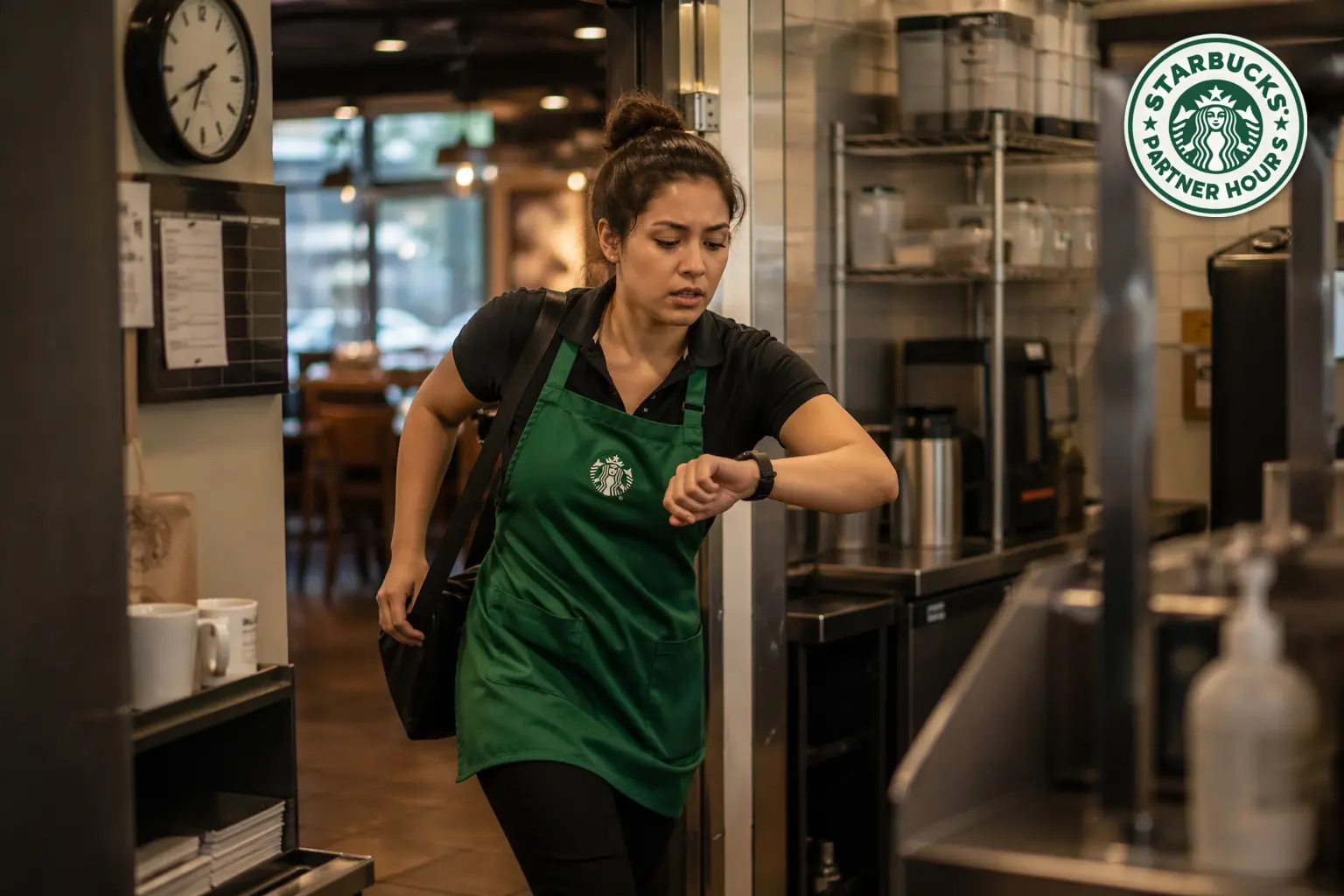
The best move is to act early and keep it simple. Call the store, explain that you are running late, give the most realistic arrival time you can, and then focus on getting there safely. Trying to hide the delay or hoping no one notices almost always makes the situation worse.
After that, make sure you understand what caused the problem. If the issue is random, learn from it and move on. If the issue is recurring, like transportation trouble, childcare timing, or unrealistic scheduling, then it is better to speak with your manager before the pattern becomes a disciplinary issue. Small problems are much easier to fix early than after they start showing up in documented attendance concerns.
How the Teamworks App Helps
The Starbucks Teamworks app and related partner scheduling tools can help a lot with preventing avoidable lateness. They make it easier to check shift times, track schedule changes, and avoid the classic mistake of showing up for the wrong start time. That alone saves a lot of trouble, especially in stores where schedules move around.
The app will not fix traffic or a missed alarm, of course, but it does help partners stay more organized. When your schedule is clear and visible, you have fewer excuses for simple timing mistakes. That matters because attendance problems often start with little avoidable errors that could have been caught earlier.
What New Partners Should Understand
New partners sometimes underestimate how much Starbucks values reliability. They may assume the job works like a casual shift role where being a little late is annoying but mostly ignored. Starbucks usually does not view it that way, especially in busy stores where one missing person affects the whole floor immediately.
That is why new baristas should take punctuality seriously from the start. A strong attendance reputation gives you more credibility when real emergencies happen later. On the other hand, if your early pattern already looks shaky, you may get less patience when something genuine goes wrong.
Can You Be Fired for Lateness?
Yes, it can happen, but usually because lateness became an ongoing attendance problem rather than because of one random bad day. The risk goes up when tardiness keeps repeating, warnings are ignored, or the partner fails to follow communication expectations. In that sense, the issue is usually the pattern of unreliability, not one isolated clock mistake.
That is why the late policy should be taken seriously without turning it into panic. One bad shift is not usually the whole story. But repeated lateness can become the kind of issue that managers feel pressured to act on, especially when it affects the rest of the team.
FAQs
Usually, the outcome depends on how late you were, whether you called ahead, and whether this is part of a pattern. A one-time issue may lead to coaching, while repeated lateness can lead to corrective action.
It can happen, but many stores will start with a conversation or reminder if it is a first-time issue. Still, partners should not assume a first late arrival is invisible.
Some partners talk about unofficial grace, but the safest expectation is that your scheduled start time is your actual start time. Relying on store myths is risky.
The safer move is to call the store directly so the team can plan for coverage. Just texting a coworker is usually not strong enough communication on its own.
Yes, repeated lateness can become a serious attendance problem if it keeps happening. The larger issue is usually reliability, not one isolated delay.
Conclusion
The Starbucks late policy is really about reliability more than punishment. One late shift may lead to coaching or a reminder, especially if you communicated early and usually show up on time. But once lateness becomes a pattern, it can turn into a bigger attendance issue with real consequences.
The smartest move is simple. If you are running late, call the store early, show up as soon as you safely can, and do not let small delays become a habit. Starbucks teams run on timing, and partners who protect that timing usually protect their own standing too. Check Starbucks Military Leave Policy